Vientiane to Luang Prabang by Train: The Complete Guide
By the Travel Laos team · 22 November 2026 · 8 min read · Updated 23 November 2026
In this post
- Route, Duration and Frequency
- Vientiane Railway Station: What to Know Before You Go
- Ticket Classes and Prices for the Vientiane to Luang Prabang Train
- The Journey Itself
- Arriving in Luang Prabang: Station to Town
- Your First Afternoon in Luang Prabang
- A Weekend from Vientiane: Is It Worth It?
- Practical Notes
- Questions
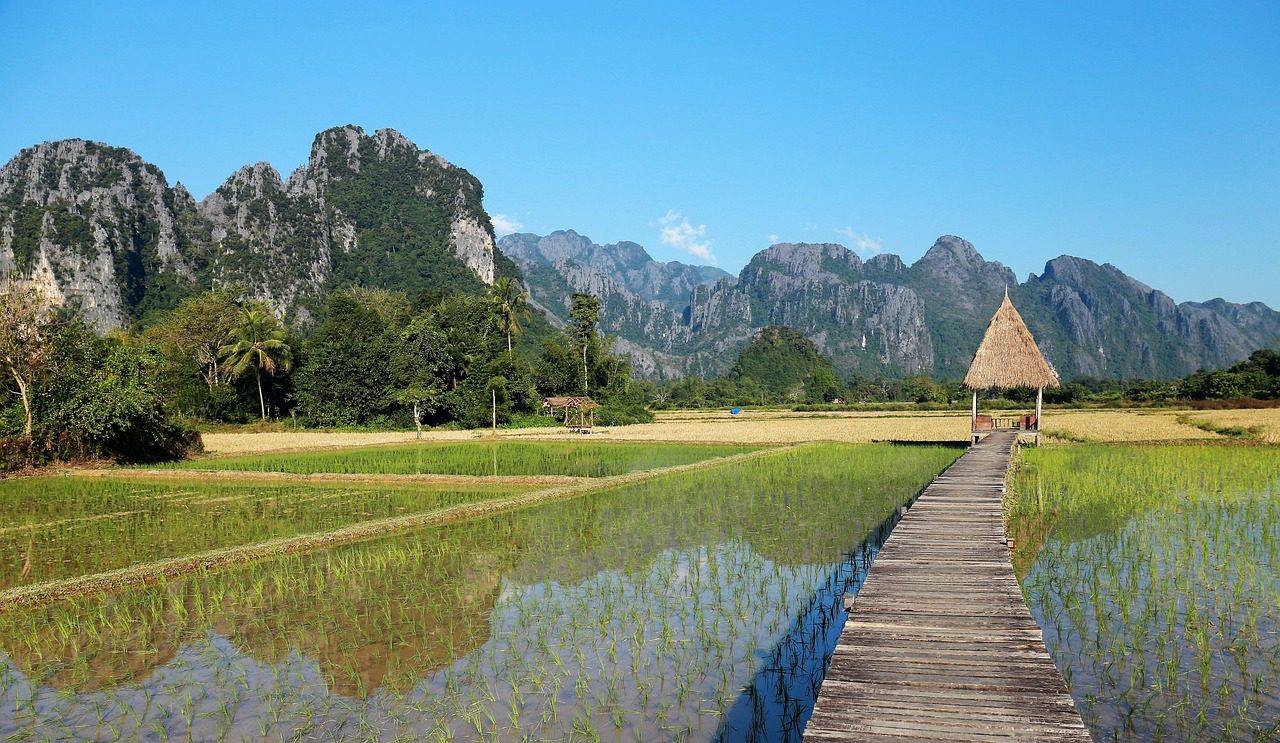
Photo: カップメーン · CC0 · via Wikimedia Commons
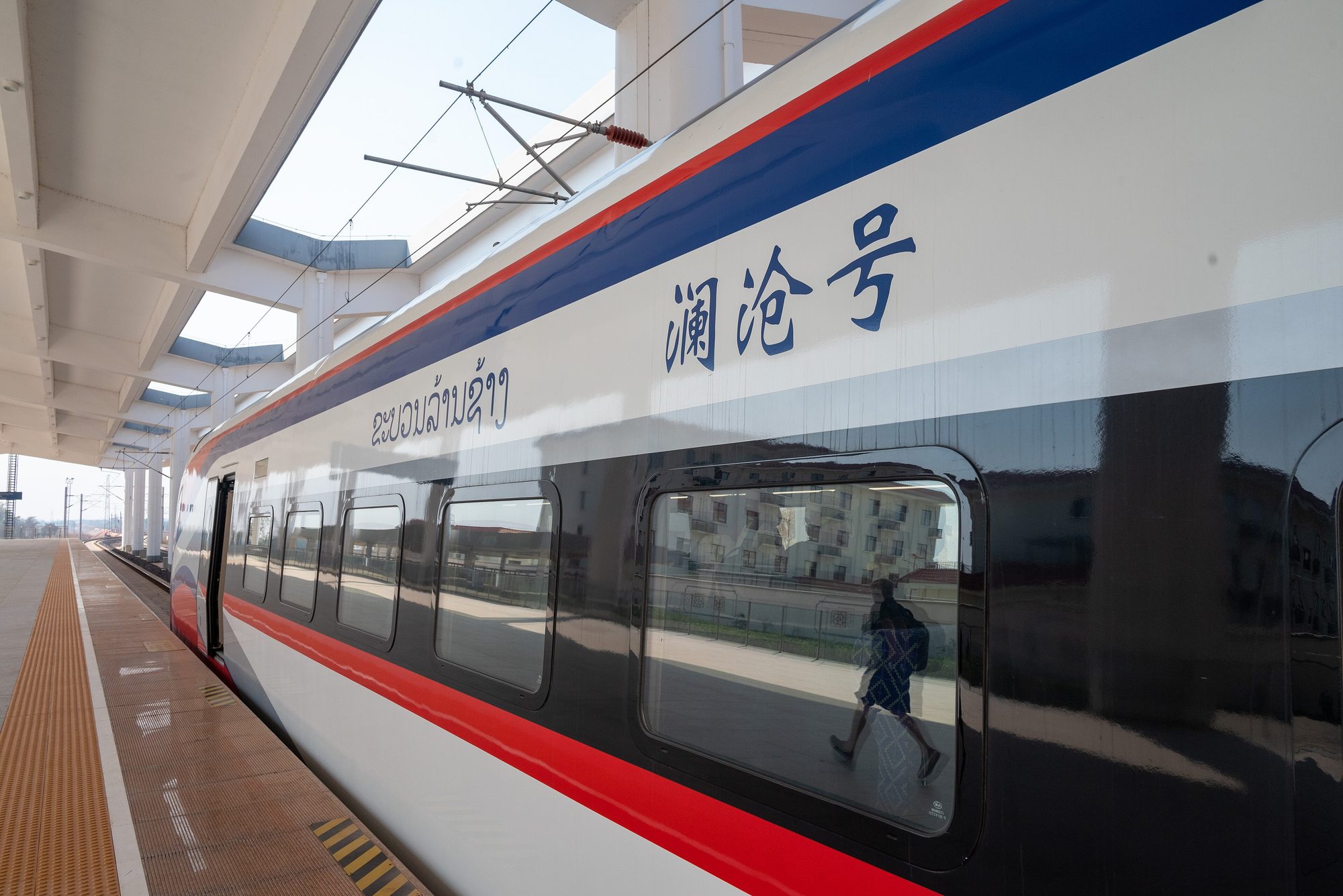
The Laos–China Railway changed the journey between Vientiane and Luang Prabang completely. What used to take six to eight hours by road — winding through mountain passes, switching minibuses in Vang Vieng — now takes roughly two hours on a modern electric train. The route has been running since December 2021, and it remains one of the more dramatic rail journeys in Southeast Asia: 75 bridges, 72 tunnels, limestone highlands all the way into Luang Prabang Province.
This guide covers how to buy tickets, what the train is actually like, what to expect at both ends, and how to make the most of your first afternoon in town.
Route, Duration and Frequency
The train runs between Vientiane (Tha Naleng) station and Luang Prabang station — which drivers and locals call Ban Paku, about 15 km from the town centre. The Lao-China Railway service also stops at Vang Vieng midway, worth noting if you plan a break in the journey.
| Detail | |
|---|---|
| Distance | approx. 420 km |
| Travel time | approx. 2 hours (Vientiane–Luang Prabang) |
| Vang Vieng stop | approx. 1 hour from Vientiane |
| Operating days | Daily |
| Daily departures | Multiple each direction (confirm current timetable) |
There are several departures in each direction per day, from morning to early evening. Timetables are adjusted regularly, so confirm before you travel. The Lao Tourism Authority publishes updates, or ask your accommodation to check locally.
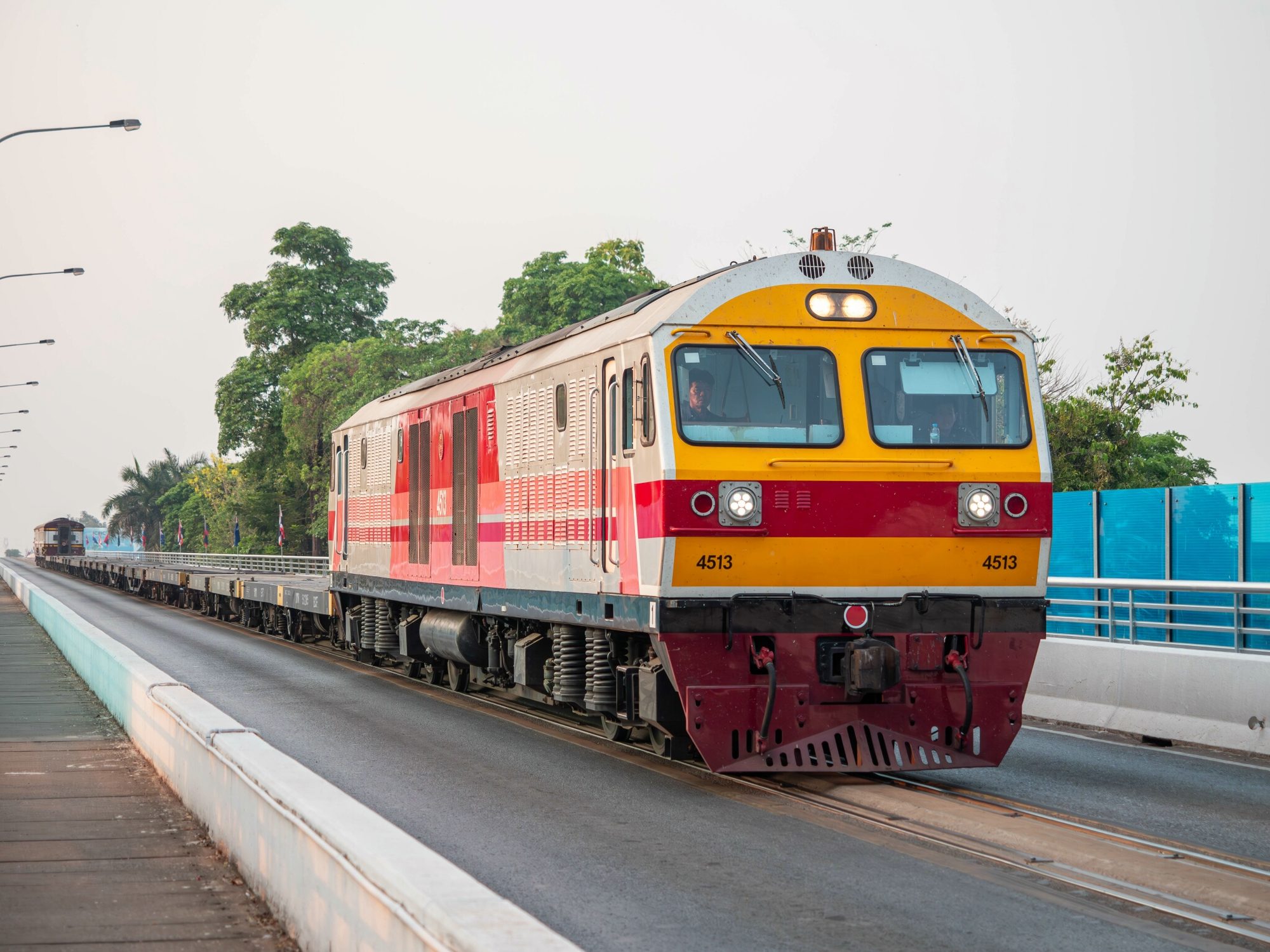 Related readBangkok to Vientiane by Train: The Complete 2026 Route
Vientiane Railway Station: What to Know Before You Go
Tha Naleng station sits about 10 km from the Patuxai arch in central Vientiane, near the Friendship Bridge border crossing with Thailand. Allow extra time to get there, particularly in peak hours.
Getting from central Vientiane takes around 20–30 minutes by tuk-tuk or taxi. Shared vans run from designated points in town; your hotel reception will know the current arrangement.
The station is modern, air-conditioned and clean, with a waiting hall, food counters and luggage storage. Arrive at least 30 minutes before your train — 45 is more comfortable if you still need to collect printed tickets. You need your passport to board. Tickets are name-specific and non-transferable; the name must match your passport exactly.
Ticket Classes and Prices for the Vientiane to Luang Prabang Train
The train has two classes: Second Class (standard seats, air-conditioned) and First Class (wider seats, more legroom). There are no sleeper carriages on this service — the journey is too short.
As a general guide for travellers planning a budget (as of November 2026; fares rose by about 9% on 1 April 2026):
| Class | Approximate fare |
|---|---|
| Second Class | around 360,000 LAK |
| First Class | around 569,000 LAK |
For travellers crossing from Thailand: a combined through-ticket from Nong Khai to Luang Prabang is possible via some agents, though the systems are not fully integrated. Confirm locally before you travel.
How to book
Tickets can be bought at the Tha Naleng station ticket office, through the Lao-China Railway online platform, or via third-party booking agents. Your hotel in Vientiane can usually point you to a reliable one.
Book two to three days ahead in high season (November to February) or around Lao New Year — Boun Pi Mai, typically mid-April. Seats sell out on popular departure times.
The Journey Itself
The rolling stock is modern Chinese electric trains, the same type used on sections of the Kunming–Vientiane line. Carriages are clean and quiet.
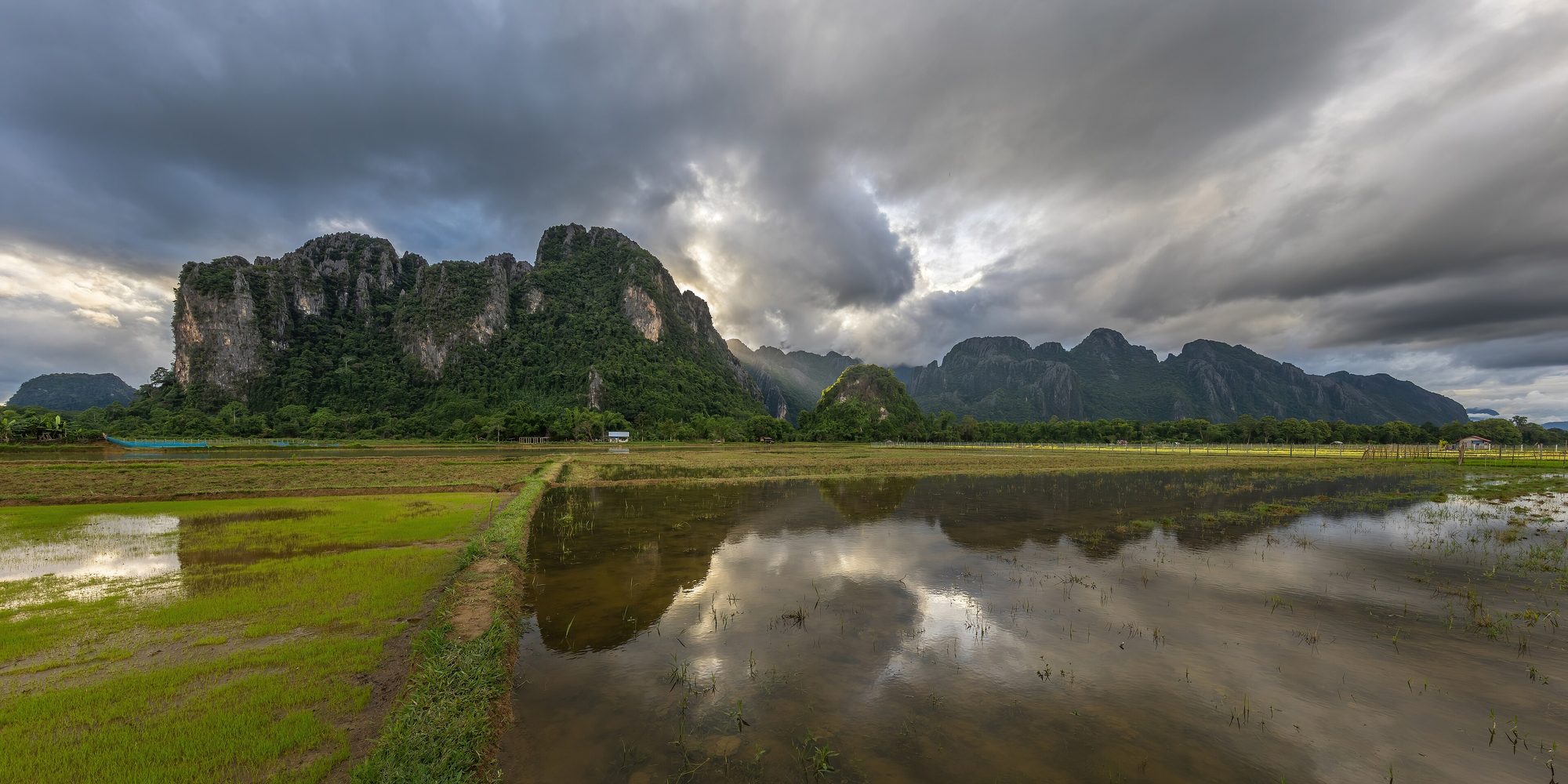
North of Vientiane, the train moves through forest and limestone karst — the kind of landscape that surprises you if flat, sprawling Vientiane is your only reference point for Laos. The section approaching Luang Prabang Province, where the train drops through tunnels and emerges onto river-valley views, is particularly good.
A food trolley runs on most departures: instant noodles, drinks, packaged snacks. Eating before you board, or bringing food from the station, gives you more options. The journey takes about two hours. With a window seat and decent light, that is not long enough.
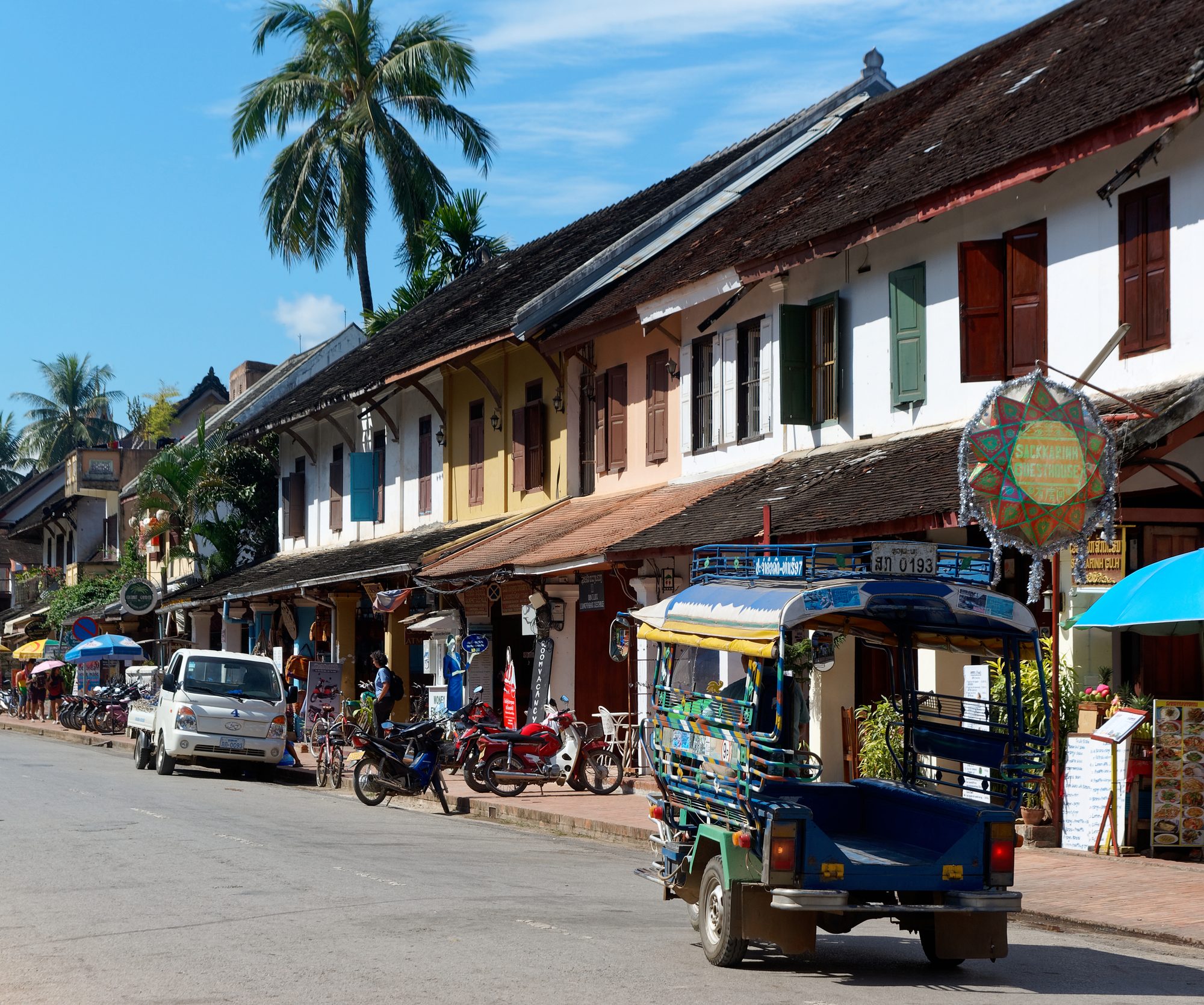
The two photos below show what you are travelling towards — from the karst landscape around Vang Vieng midway along the route, to the streets and temples of Luang Prabang itself.
Arriving in Luang Prabang: Station to Town
Ban Paku station is about 15 km north of the UNESCO Old Town. The building is striking — a sweeping curved roof designed to echo traditional Lao architecture. Getting into town is straightforward, but it needs a plan before you step off the platform.
Your options from the station forecourt:
- Official shared vans run a fixed route into town. The fare is modest — check locally for the current price. They fill and leave on no fixed schedule, just supply and demand.
- A private taxi or tuk-tuk is faster and more flexible. Expect around 20–30 minutes to town.
- A hotel transfer, if your accommodation offers one, is the smoothest option — particularly in afternoon heat or on a late arrival.
The drive in passes through quiet villages and rice fields before the road curves along the Mekong. It is a gentle introduction to the pace of the place.
Your First Afternoon in Luang Prabang
Arrive on the late-morning or midday train and you have most of the afternoon ahead of you. Luang Prabang rewards slow movement.
Sakkaline Road runs along the peninsula between the Mekong and the Nam Khan, past temple gates and colonial-era houses with shuttered windows and bougainvillea. Walking it slowly takes about forty minutes. Wat Xieng Thong, at the tip of the peninsula, is worth the visit — the gold stencil work on its façade is extraordinary in afternoon light.
The Night Market on Sisavangvong Road opens around 5 pm and runs until about 10 pm: hand-woven textiles, silverwork, Lao coffee and food stalls alongside. If your first afternoon calls for something quieter, the stretch of riverbank above the confluence of the Nam Khan and the Mekong is calm enough to watch the light change across the water.
Arriving in the evening? The train has later departures from Vientiane that put you in Luang Prabang close to sunset. Check in, leave your bags, and walk to the nearest viewpoint.
For a broader look at getting around the north, the Luang Prabang to Nong Khiaw guide covers the next leg north by road and river.
A Weekend from Vientiane: Is It Worth It?
For Vientiane residents or travellers with a few days' flexibility, Luang Prabang on the train makes a workable weekend. Leave Friday evening or Saturday morning, arrive in time for lunch, spend a day in the old town, return Sunday afternoon.
The journey is short enough that you are not exhausted when you arrive — not always true of the old road. Most people who do this trip once book the return before they leave.
Practical Notes
Luggage: Overhead racks and a space at the end of each carriage for larger bags. Everything travels with you — nothing is checked in.
Mobile signal: Lao telecom SIM cards work well in Vientiane and Luang Prabang. Signal drops inside the many tunnels on this route.
Currency: Laos uses the Lao Kip (LAK). US dollars are widely accepted in Luang Prabang for hotels and larger purchases; for markets and local food, Kip is more practical. Some vendors at stations accept Thai Baht. ATMs are available in both cities.
Entry requirements: Check the latest Lao visa requirements for your nationality before travel. The Lao e-visa portal is the official source. Your own government's travel advice pages will also have current guidance.
Health: Carry any prescription medication with you, and check the WHO Laos country page or your government's travel advice for any health notices in force when you travel.
Questions
How long does the train from Vientiane to Luang Prabang take?
Approximately two hours between Tha Naleng station in Vientiane and Ban Paku station in Luang Prabang. The train stops at Vang Vieng, roughly one hour from Vientiane. This compares with six to eight hours by road.
How much does a ticket from Vientiane to Luang Prabang cost?
As of November 2026, Second Class costs around 360,000 LAK and First Class around 569,000 LAK, after a fare rise of about 9% on 1 April 2026. Fares are set by Lao-China Railway. Check current prices when you book.
How do I book a train ticket in Laos?
At the Tha Naleng station ticket office, through the Lao-China Railway online platform, or via a third-party agent. The name on the ticket must match your passport exactly. For high season or Lao New Year travel, book two to three days ahead at minimum.
Is it cheaper to buy train tickets in advance?
The fare per class is fixed, so booking early does not lower the price. The reason to book ahead is availability: popular departure times sell out in high season. Early booking secures your preferred train rather than saving money.