Mekong River Cruises: An Insider's Guide from Luang Prabang
By the Travel Laos team · 23 November 2026 · 9 min read
In this post
- What Mekong river cruises actually cover
- The classic slow boat: Huay Xai to Luang Prabang
- Luxury cabin cruises: the southern route
- Day cruises and longtail boats from Luang Prabang
- Which cruise style suits which traveller?
- The Nam Khan: a quieter river next door
- Practical things to know before you book
- Questions
Photo: Clay Gilliland · CC BY-SA 2.0 · via Wikimedia Commons
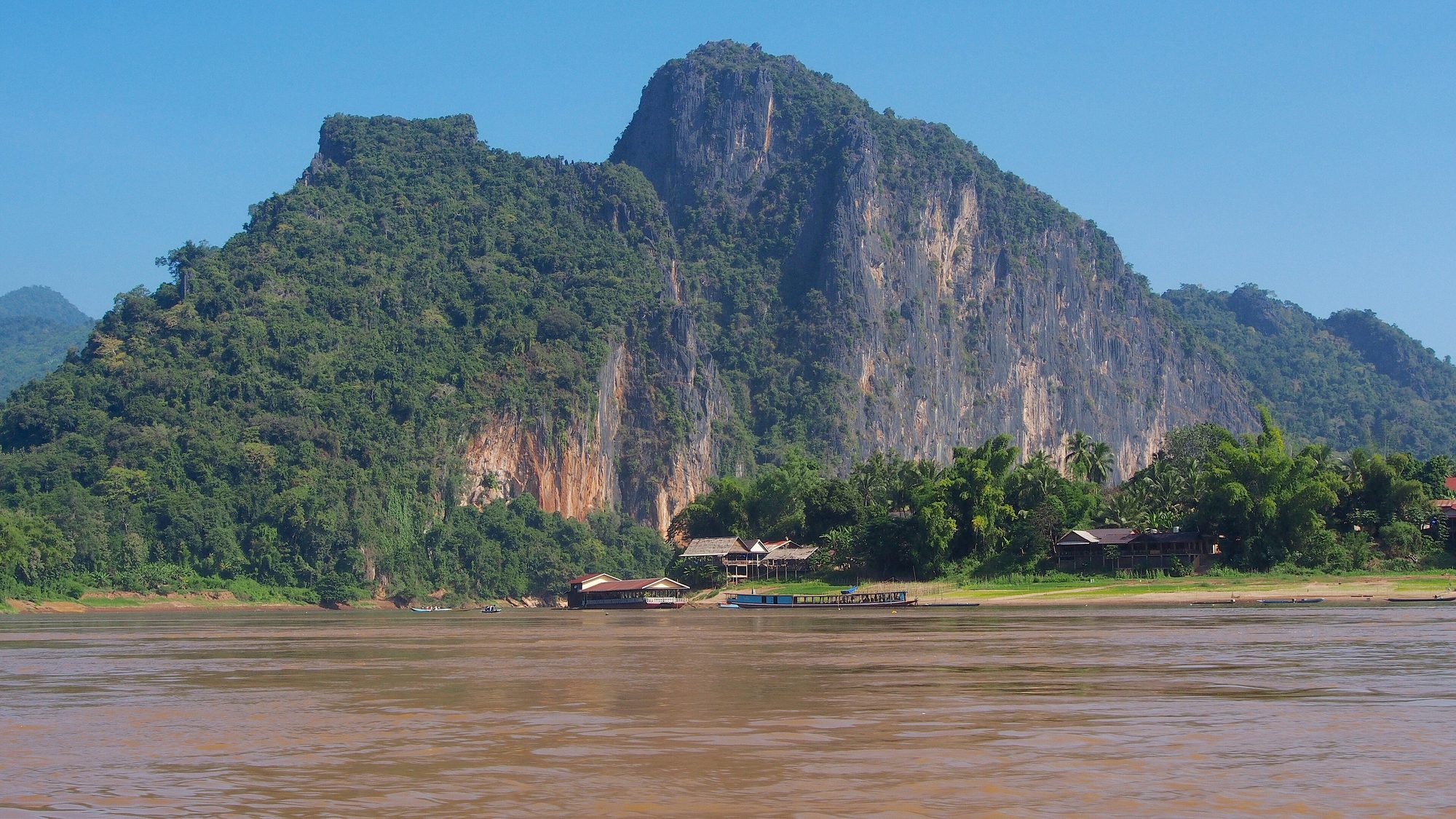
The Nam Khan meets the Mekong at Luang Prabang, and from the riverbank you can watch the whole range of river traffic in a single morning — longtails carrying monks, slow boats loaded with backpacks, the occasional gleaming cruise vessel rounding the bend from the north. Which Mekong river cruise suits you depends on who you are, how much time you have, and what kind of journey you want. This guide gives you the picture the cruise operators leave out.
What Mekong river cruises actually cover
The Mekong runs roughly 4,350 kilometres from the Tibetan Plateau through Yunnan, Myanmar, Laos, Thailand, Cambodia and Vietnam before fanning into a delta south of Ho Chi Minh City. No single cruise covers it all. The portion most travellers encounter runs between northern Laos and the Cambodian border, in two rough arcs.
The northern arc — Huay Xai to Luang Prabang — is what most independent travellers know as the slow boat route. The southern arc, from the Thai border town of Chiang Khong down through Cambodia to the Vietnamese delta, is where the larger luxury vessels operate. These two experiences are almost nothing alike, and conflating them leads to real disappointment.
 Related readTop Attractions in Luang Prabang: A Practical Ranked Guide
The classic slow boat: Huay Xai to Luang Prabang
The two-day slow boat from Huay Xai on the Lao-Thai border to Luang Prabang is one of the great overland journeys in Southeast Asia. It costs very little, runs on a wooden vessel about 30 metres long, and carries a mix of backpackers, families and the occasional retired couple who found it in a guidebook.
The first day takes roughly six to eight hours. The river narrows and widens, forested hills crowd the banks, villages appear and vanish. You stop overnight in Pak Beng, a small town that exists largely to service the boats. The second day brings you into Luang Prabang in the early afternoon.
What it is: a genuinely scenic, slow, sociable experience with basic seating, limited food on board, and no private cabins. There is no service, no commentary, no activities. You sit, watch the river, and talk to whoever is beside you. For the right traveller — patient, curious, comfortable with long stretches of quiet — it is formative. For anyone expecting comfort, it will be a long two days.
Practical note: The slow boat departs from Huay Xai, reached by crossing the Friendship Bridge from Chiang Rai in Thailand. Schedules and operators change seasonally; confirm current timings locally or at the border. The Tourism Authority of Laos maintains general travel information at Tourism Laos.
Some travellers combine the slow boat arrival into Luang Prabang with the high-speed Laos China Railway onward to Vientiane — a genuinely efficient pairing that makes the most of both river and rail.
Luxury cabin cruises: the southern route
A different category of scenic Mekong river cruise runs between northern Thailand, Cambodia and Vietnam on vessels with private cabins, restaurant dining, excursions and a guide. These trips typically run five to fourteen nights and cover UNESCO-listed sites along both banks: temples, riverside markets, floating villages.
The operators best known in the UK market — Pandaw, Viking, Scenic and Emerald among others — concentrate on this southern section. Itineraries often begin in Chiang Rai, Chiang Mai or Ho Chi Minh City and work in either direction. The appeal is genuine: you sleep on the river, wake in a different place each day, and step ashore into Phnom Penh, Siem Reap or the Mekong Delta without handling logistics.
What these cruises do not offer is the Luang Prabang cultural experience. The city sits on the upper Mekong, and most large luxury vessels cannot navigate the rapids between Luang Prabang and the southern route. Travellers who want both typically fly in and out of Luang Prabang separately, adding it as a land stop before or after the cruise.
A note on seasons: The Mekong's water level drops sharply during the dry season (roughly November to May). Some sections become impassable for larger vessels, and operators adjust itineraries accordingly. The green season (June to October) raises water levels significantly. Always confirm with your operator which sections they actually navigate in the month you plan to travel.
Day cruises and longtail boats from Luang Prabang
If you are already in Luang Prabang, you do not need to commit to a multi-day passage. Several local operators run half-day and full-day Mekong excursions from the town's main landing.
The most visited stop is the Pak Ou caves — two cave shrines packed with thousands of Buddha images, about two hours upstream by longtail. The journey itself is part of it: terraced fields give way to limestone bluffs, fishing platforms hang over the water on bamboo poles. Afternoons sometimes include a stop at a village known for its rice wine.
These shorter excursions suit guests who have three or four days in Luang Prabang and want one morning on the Mekong without committing a week to it. Bookable through any guesthouse, tour desk or directly at the river landing near the main market. Confirm prices, departure times and what is included before you board.
Which cruise style suits which traveller?
Here is the comparison the cruise operators tend not to write.
Photo: DEZALB · Pixabay Content License · via Pixabay
| Traveller type | Best option |
|---|---|
| Budget traveller, 3–4 weeks in SE Asia | Slow boat Huay Xai–Luang Prabang |
| Couple, 10–14 days, comfort a priority | Luxury cabin cruise, southern Mekong |
| Family with children | Luxury cruise or Luang Prabang day boat |
| Solo traveller, 60+, wants cultural depth | Luxury cruise with guided shore excursions |
| Short stay in Luang Prabang | Pak Ou half-day longtail from town |
| Adventurous pair, wants something different | Slow boat plus kayaking on the Nam Khan |
The river changes character completely depending on the section. The northern Mekong is narrower, wilder, greener. The southern section — through Cambodia to Vietnam — is broader, brown, dotted with floating villages and paddy fields running flat to the horizon. Neither is objectively better. They are different rivers, in a sense.
The Nam Khan: a quieter river next door
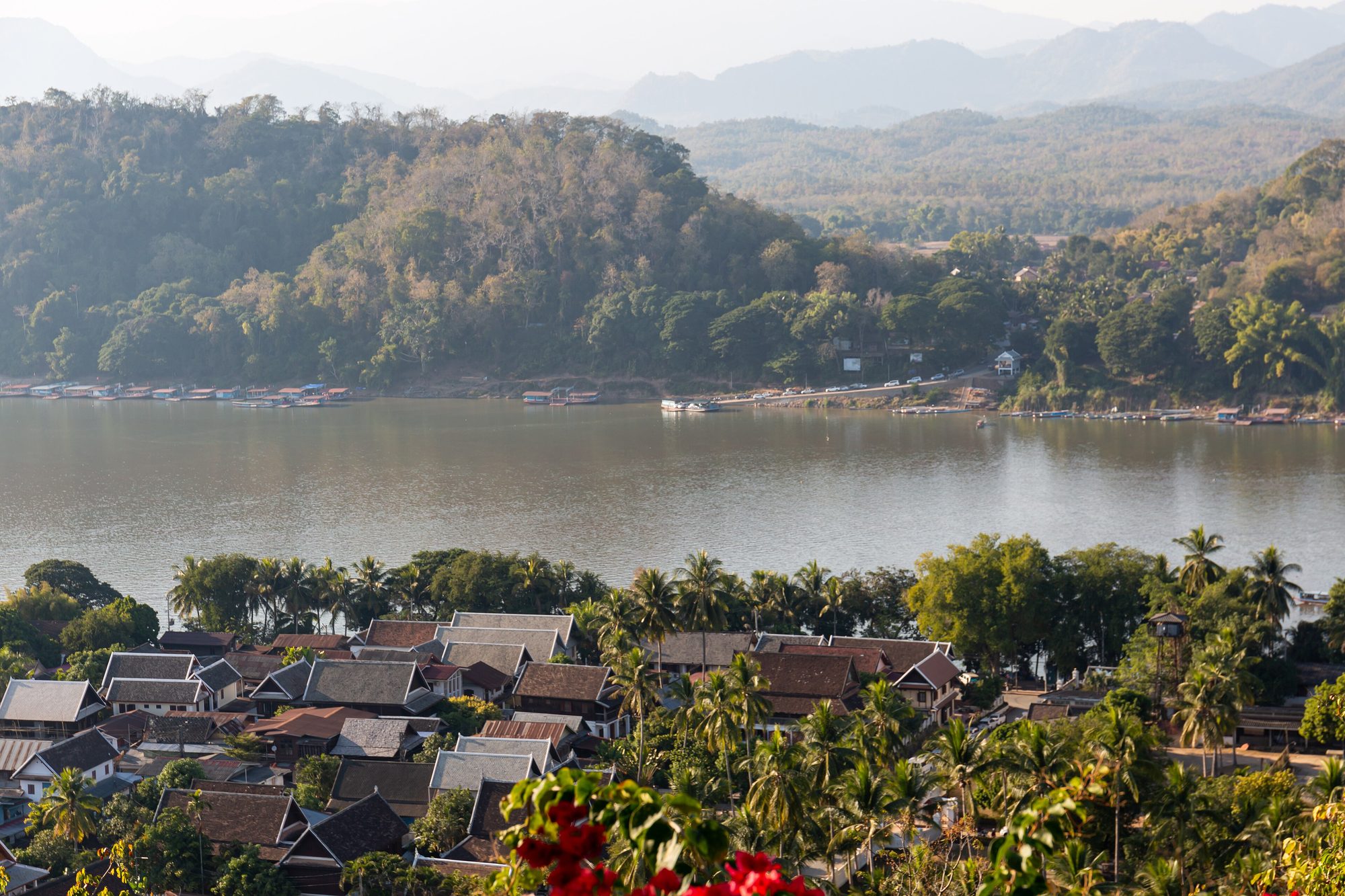
The Nam Khan is not the Mekong: it is a smaller river that meets the Mekong just outside the old town boundary. The meeting point — the Chompet confluence — is about twenty minutes' walk from Luang Prabang's main street and visible from several of its temples.
If a multi-day cruise is more than you want, a few hours on the Nam Khan itself is a good alternative. It is a quieter, narrower, greener stretch of water than the Mekong, and kayaking trips from Luang Prabang let you hear the birds and slow down without an engine. Many people come back surprised by what a few hours on a Lao river actually feels like.
Luang Prabang makes an excellent base for anyone planning a Mekong river cruise itinerary who wants a few days on land before or after a boat journey.
Practical things to know before you book
Entry and visa: Most nationalities can obtain a Lao visa on arrival or an e-visa. For multi-country cruises through Cambodia and Vietnam, check visa requirements for each country separately. The UK government's travel advice at Laos travel advice is a reliable starting point.
Health: Mekong cruises travel through tropical regions. Consult your GP or a travel health clinic well before departure. The WHO travel health pages cover vaccinations, malaria prophylaxis and water safety. Never drink river water.
Seasonality: This matters more for river cruises than almost any other trip type. The difference between high water and low water affects which temples and villages are accessible by boat, what the banks look like, and in some cases whether a cruise departs on schedule. Ask your operator directly which sections they guarantee in the month you plan to travel.
What to pack for the slow boat: A travel pillow, snacks, a paperback, a daypack you can reach without opening your main bag, and patience. The ride is long. For many people it turns out to be the most memorable part of their trip.
Questions
Is a Mekong river cruise worth it?
For most travellers, yes — though the right answer depends on which type you choose. A multi-day luxury cruise on the southern Mekong delivers cultural stops, good food and comfortable cabins. The two-day slow boat from Huay Xai to Luang Prabang is rougher, but for independent travellers it remains one of the most honest ways to arrive in northern Laos.
Which river cruise line is best for seniors?
Luxury cabin cruises on the southern Mekong work well for older travellers: shore excursions are guided, vessels are stable, and you manage no logistics between stops. Operators such as Viking, Scenic and Pandaw build itineraries around comfort and cultural access. The slow boat involves long hours on hard seating with no cabin — worth knowing before you decide.
What is the difference between the slow boat and a luxury cruise?
The slow boat from Huay Xai to Luang Prabang is a local wooden vessel: no cabins, basic seating, simple food, two days with an overnight stop in Pak Beng. A luxury cruise offers private cabins, restaurant meals and guided excursions, usually on the lower Mekong. The two share a river and very little else.
Can you do a Mekong river cruise from Luang Prabang?
Day excursions run from town — typically half-day longtail trips to the Pak Ou caves. Luang Prabang is also the southern endpoint of the slow boat from Huay Xai. Most large luxury vessels operate in Cambodia and Vietnam and do not reach the city; the upper river is too shallow and fast for bigger ships. Travellers combining both generally fly between the two.