Is Laos Safe to Travel? A Complete Guide (2026)
By the Travel Laos team · 22 November 2026 · 8 min read · Updated 23 November 2026
In this post
It is a fair question, and one most people ask before they book. What follows is practical guidance for Luang Prabang and the wider country: the same advice experienced travellers and local guides give before a first visit.
The short answer: yes, Laos is safe to travel to for the overwhelming majority of visitors. It is one of Southeast Asia's quieter destinations — low crime, genuinely welcoming communities, a pace of life that rarely feels threatening. That said, it rewards a little preparation. This guide walks through the main considerations so you can travel with confidence.
Is Laos a Safe Country?
By regional standards, Laos is a low-crime destination. Violent crime against tourists is rare. Opportunistic petty theft — a bag left on a restaurant chair, a phone on a table — happens, as it does anywhere, but it is not a defining feature of travel here.
The government maintains a stable political environment. Public political gatherings do not occur, so the kind of civil unrest that disrupts travel elsewhere is not a feature of day-to-day life.
Where caution is warranted:
UXO (unexploded ordnance): Laos is one of the most heavily bombed countries in history, per capita. Ordnance from the 1960s and 1970s remains in some rural and remote areas, particularly in the east and south. Around Luang Prabang the risk is very low, but the advice is consistent: stay on marked paths in rural areas, never pick up unfamiliar metal objects, and book excursions through reputable operators who know the land. The UXO Lao national programme publishes current clearance information.
Road safety: Traffic accidents are the most common cause of serious harm to travellers in Laos. Roads outside the main towns can be narrow, poorly lit, and shared with large vehicles and livestock. Night driving carries higher risk. Renting a motorbike without experience on these roads is best avoided.
Scams: They exist, mainly in tourist hubs. Inflated tuk-tuk fares and gem shop pressure tactics are the most frequently reported. Annoying rather than dangerous.
 Related readLaos Travel Visa: Complete Guide for UK Travellers
Laos Travel Safety: Health and Medical Considerations
Health preparation matters more than crime prevention for most visitors.
Vaccinations: Consult your GP or a travel health clinic well in advance. Hepatitis A, typhoid and tetanus are routinely recommended. Rabies is worth discussing if you plan to spend time in rural areas or interact with animals. Japanese encephalitis may be relevant for longer stays.
Malaria: The risk varies significantly by region. Around Luang Prabang city and the main tourist areas it is considered low, but guidelines change. Check the current advice from your government's travel health service before you travel — the UK's is at UK government travel advice for Laos.
Dengue fever: Present throughout Laos, including in Luang Prabang. Mosquito-transmitted, with no vaccine available to most travellers. Covering up at dusk and dawn and using repellent reduces risk substantially.
Food and water: Drink bottled or purified water. Street food in Laos is generally good — cooked food from busy stalls is safer than salads or raw garnishes from places with low turnover.
Medical facilities: Luang Prabang has clinics capable of handling common travel ailments. For anything serious, evacuation to Chiang Mai or Bangkok is the standard course. Travel insurance with medical evacuation cover is essential.
Laos Travel Warning: What Official Advice Actually Says
The UK Foreign, Commonwealth & Development Office advises travellers to exercise normal precautions in Laos, with heightened awareness in certain areas. It does not advise against travel to Luang Prabang or the main tourist circuit.
Specific areas where additional caution is flagged include some provinces bordering Vietnam and remote mountainous regions. If your itinerary keeps you on the established tourist trail — Luang Prabang, Vang Vieng, the Plain of Jars, the 4,000 Islands — official guidance is broadly reassuring.
Always check your own government's current travel advice before you travel. The Lao National Tourism Administration also publishes practical visitor information.
Is $100 USD a Lot in Laos?
Yes. By regional standards $100 USD goes a long way, particularly outside Luang Prabang's most tourism-facing establishments.
A rough sense of scale (treat these as general orientation only — costs vary and change):
| Category | Rough Range |
|---|---|
| Local restaurant meal | Very affordable |
| Mid-range guesthouse, per night | Moderate |
| Tuk-tuk across town | Very affordable |
| Entry to most temples | Minimal fee |
| Tour with a reputable operator | Varies widely |
Luang Prabang has a full spectrum of accommodation and dining — from very simple to boutique luxury. For day-to-day expenses in town — temples, markets, cafés, local transport — a modest daily budget covers a great deal.
Is Thailand or Laos Better for Travel?
This depends entirely on what you are looking for. They are very different experiences — and if you are weighing them up, Laos or Thailand: Which Should You Choose? goes into the comparison in detail.
Thailand offers more developed infrastructure, a wider range of accommodation at every price point, more international flight connections, and a larger expat and tourist community. It is easier to navigate independently with less preparation.
Laos is quieter, less crowded, and for many travellers more authentic in feel. The pace is slower. The temples of Luang Prabang are genuinely less visited than those in Chiang Mai or Bangkok.
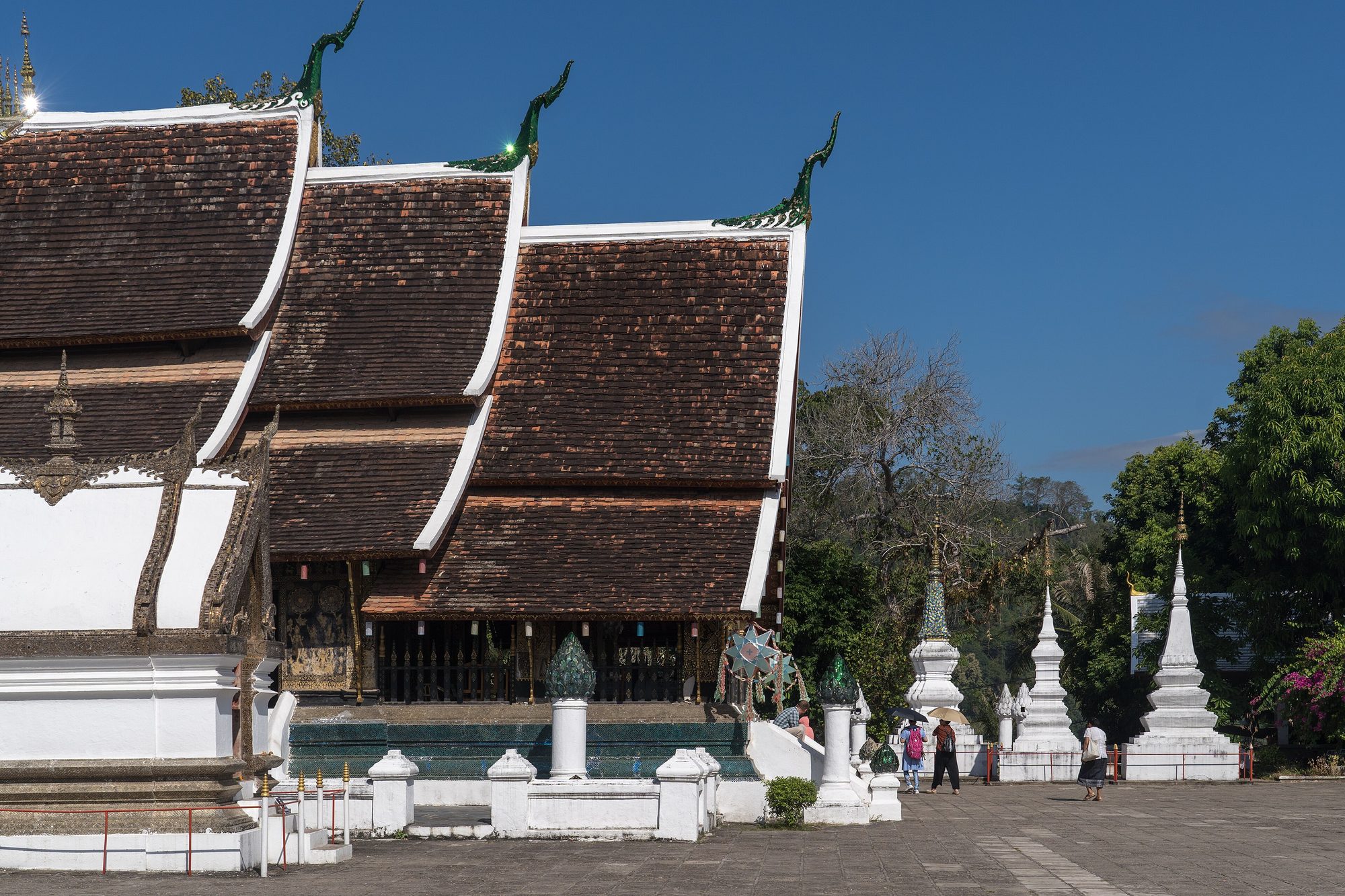
Photo: Alexkom000 · CC BY 4.0 · via Wikimedia Commons
The countryside around the Nam Khan and Mekong rivers has a quality of light and calm that is harder to find in busier destinations. Many visitors do both: flying into Bangkok or Chiang Mai, then crossing into Laos overland or on a short flight. The two countries complement each other well.
Local Etiquette: What Travellers Often Miss
Safety and comfort in Laos extend beyond crime and health. Getting the cultural register right makes a real difference.
Dress codes: Cover shoulders and knees when entering temples. Swimwear belongs on the river or at the pool, not in town.
The head and feet: In Lao culture, the head is the most sacred part of the body and the feet the least. Avoid touching anyone's head, and do not point your feet at people, religious objects, or images of the Buddha.
Monks: Do not touch monks, and do not hand objects directly to them. Women should take particular care not to come into physical contact with monks, and should not sit beside them on public transport.
Bargaining: Less aggressive than in some neighbouring countries. A polite, good-humoured negotiation is fine.
Photography: Ask before you photograph people, especially monks, children, and during religious ceremonies. Many people are happy to be photographed; asking is simply respectful.
Volume: Lao culture values calm and quiet. A smile goes a long way.
The alms-giving ceremony, Tak Bat, takes place each morning in Luang Prabang. If you wish to observe or participate, do so respectfully — maintain quiet, dress modestly, and follow the guidance of local people around you.
Arriving at Luang Prabang: Practical Notes
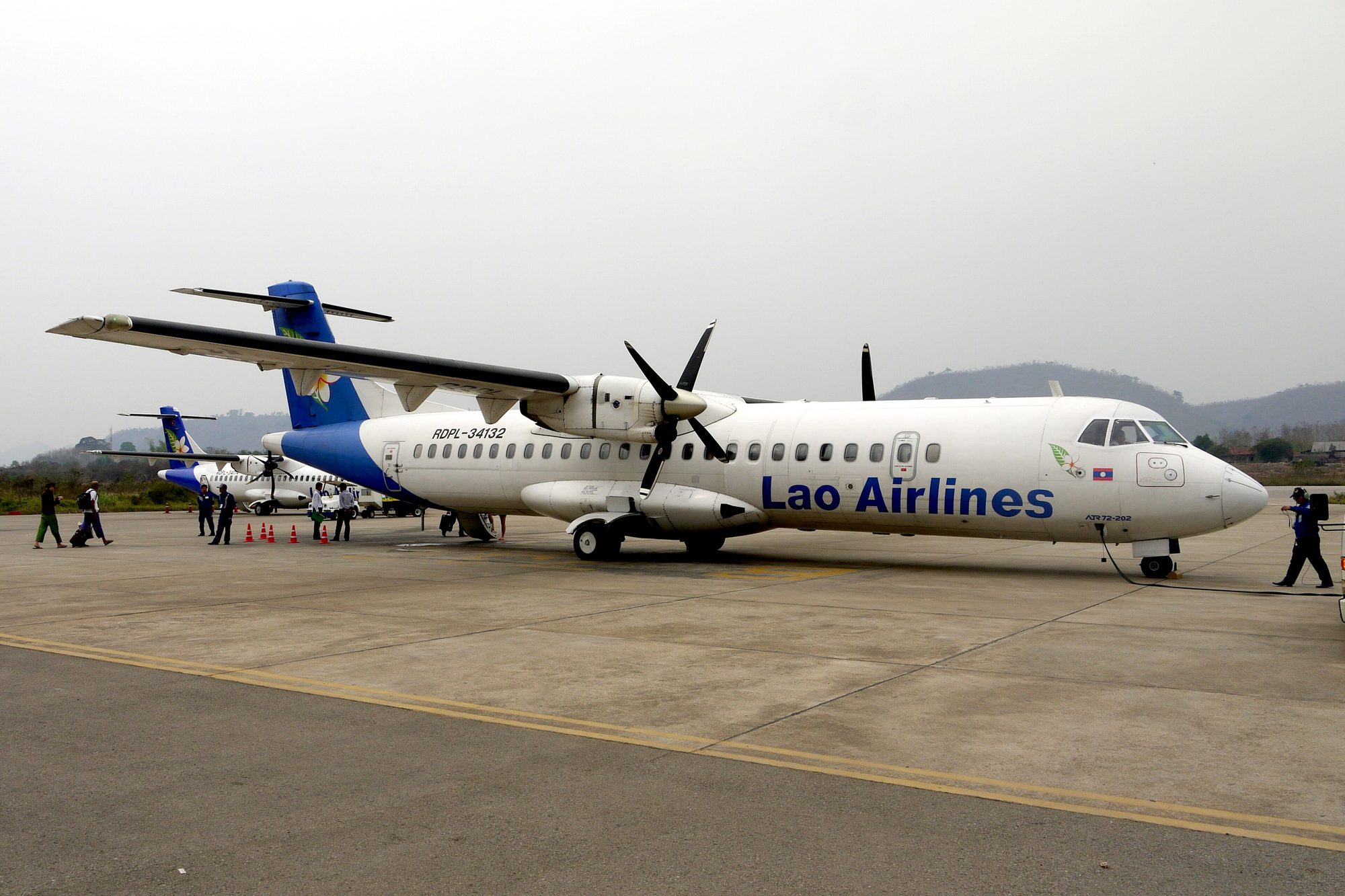
Luang Prabang International Airport receives direct connections from several regional hubs. From the airport, a tuk-tuk or taxi to the Old Town takes roughly 15–20 minutes. Agree a price before you get in.
If you are arriving by the slow boat from Thailand — two days along the Mekong, docking at Pak Beng overnight — it is an experience in itself. The scenery is extraordinary. Bring something to read, food for the journey, and patience.
The Luang Prabang to Vientiane train runs through dramatic mountain scenery and is a notable improvement on the old road journey. For more on getting here, see the arrivals guide for Luang Prabang Airport.
Questions
Do I need a visa to enter Laos?
Most nationalities can obtain a visa on arrival at Luang Prabang Airport and major border crossings, or apply for an e-visa in advance. Requirements and fees change — check the current rules with the Lao embassy or your government's travel advice before you travel.
Is tap water safe to drink in Laos?
No. Drink bottled or filtered water throughout your stay, including when brushing your teeth. Most hotels and guesthouses provide drinking water; ask your accommodation how they supply it.
Is Luang Prabang safe for solo female travellers?
Generally yes. Solo women travel to Luang Prabang without incident regularly. Standard precautions apply: return to your accommodation before very late, keep valuables out of sight, and trust your instincts in unfamiliar situations.
Is it safe to use ATMs in Luang Prabang?
Yes, ATMs are available in Luang Prabang town. Withdraw what you need for a few days rather than large sums at once, and use machines attached to banks during daylight hours where possible.