Wat Xieng Thong Luang Prabang: Visitor Guide
By the Travel Laos team · 22 November 2026 · 8 min read · Updated 23 November 2026
In this post
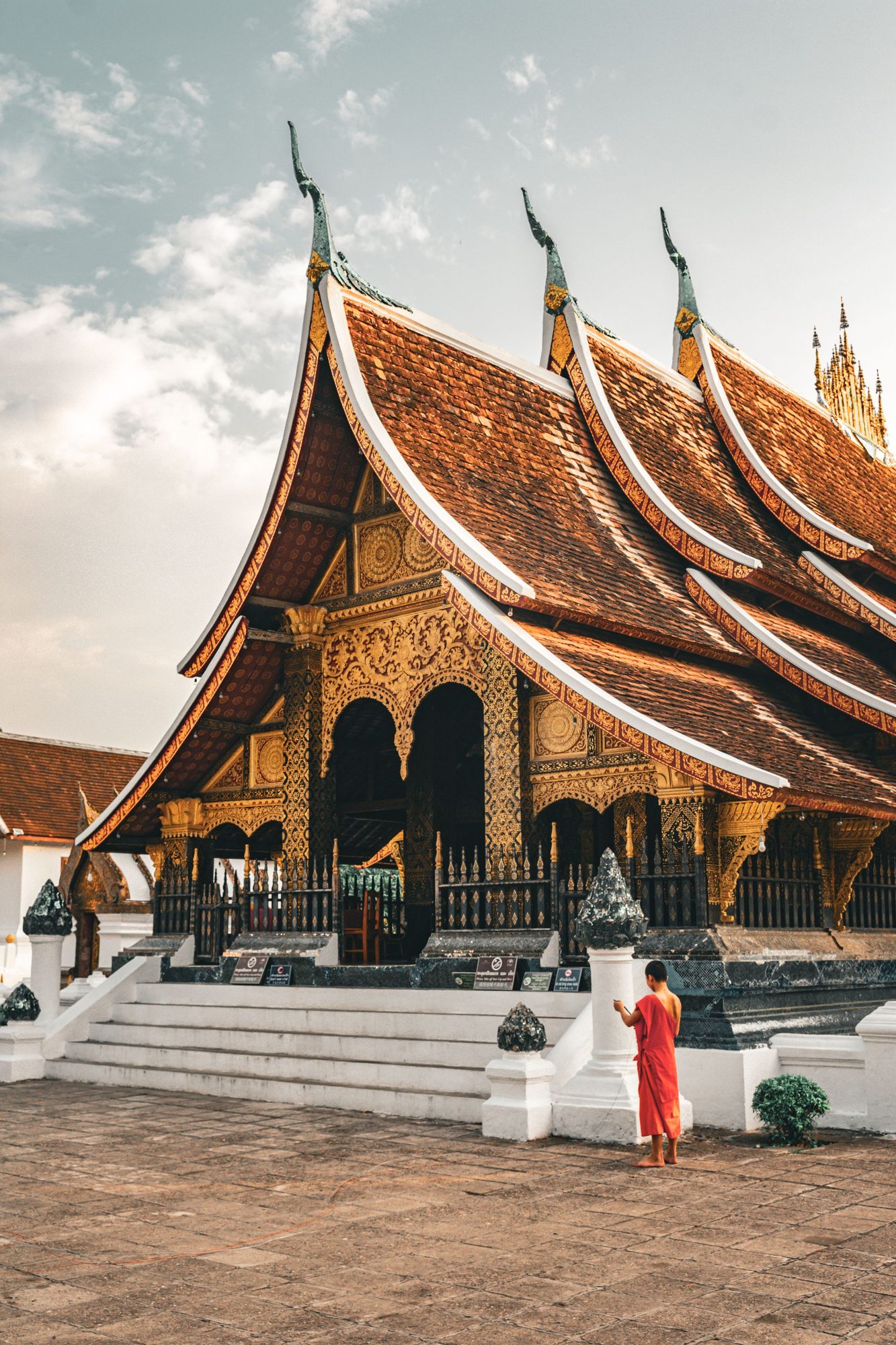
Photo: Ehsan Haque · Pexels License · via Pexels
Luang Prabang has more than thirty temples within its old town peninsula, and no two are alike. If you visit only one, it should be Wat Xieng Thong. Built in 1560 under King Setthathirath, it stands at the northern tip of the peninsula where the Nam Khan meets the Mekong. Its sweeping, tiered roof nearly touches the ground — a silhouette that appears on almost every image of the city. The temple has never been abandoned and never destroyed. It is one of the best-preserved examples of classical Luang Prabang architecture in Laos.
This guide covers what you will find at Wat Xieng Thong, the other temples worth visiting, the deeper context of Lao Buddhism, and how to make the most of your time in the city.
What Makes Wat Xieng Thong Worth Visiting
The main sim (ordination hall) is the centrepiece. Its rear wall carries the Tree of Life mosaic — thousands of fragments of red and gold glass pressed into a sweeping composition of figures, animals and foliage. No photograph captures the scale of it properly. Stand in front of it in the early morning, when the light is low and the monks are chanting inside, and you understand why this place has been continuously venerated for nearly five centuries.
Inside the complex, look also for the Red Chapel, which houses a rare reclining Buddha in Luang Prabang style — elongated, serene, the gold worn smooth with age. The Royal Funeral Chariot Hall sits at the far end of the grounds; the chariot inside, carved and gilded, was used to carry royal remains in procession. Both are open to visitors.
The complex runs down to the Mekong riverbank. Sitting on the stone steps at the water's edge after visiting, watching the river traffic, is a good way to let the place settle.
Practical notes: Wat Xieng Thong is open daily. Visitors are asked to cover shoulders and knees and to remove shoes before entering any building. Photography inside the main sim requires care — always ask before pointing a camera at a monk or at an active ceremony. The best light is early morning, before tour groups arrive.
 Related readLao vs Thai Food: What's Actually Different?
Why Is Luang Prabang a UNESCO World Heritage Site?
Luang Prabang was inscribed on the UNESCO World Heritage List in 1995. The designation covers the entire old town, not just individual buildings. What impressed the evaluators was the exceptional fusion of two urban traditions: traditional Lao wooden and brick architecture alongside the French colonial buildings introduced during the late nineteenth and early twentieth centuries. Nowhere else in mainland Southeast Asia did those two traditions survive side by side so completely.
The temples were central to that decision, but so was the living culture around them. The Tak Bat — the daily alms-giving procession in which monks walk through the streets collecting offerings at dawn — still happens every morning. The traditional crafts, the monastic schools, the market rhythms: they are not reconstructed for tourism. They simply continue.
Does Laos Have Temples?
Thousands. Laos is one of the most Buddhist nations in the world by population share, and the temple — the wat — is the social and spiritual centre of almost every Lao community. In rural villages a wat may be a simple wooden structure with a corrugated iron roof; in Luang Prabang the temples rank among the finest in Southeast Asia.
In Luang Prabang alone there are more than thirty active wats. The ones most worth visiting alongside Wat Xieng Thong:
- Wat Mai — a five-tiered roof structure close to the Royal Palace Museum, known for its gilded bas-relief panels depicting scenes from the last life of the Buddha
- Wat Visounnarath — the oldest standing temple in the city, with the distinctive watermelon-shaped stupa called That Makmo
- Wat Aham — small, shaded by giant trees, often quiet, used for ceremonies marking Lao New Year
- Wat Paphai — Buddhist lectures and meditation sessions with the resident monks
That last one is worth noting for anyone who wants more than sightseeing. The monks at Wat Paphai welcome visitors for genuine exchange — conversation, meditation, an explanation of monastic life. It is a different kind of contact with Lao Buddhism than walking through a heritage site.
Beyond Luang Prabang, the country has remarkable sacred sites from other eras. Wat Phou in Champasak province is a Khmer-era Hindu temple complex, pre-dating Angkor in some of its phases, and a UNESCO World Heritage site in its own right.
If you are weighing Luang Prabang against other destinations in the region, our guide to Laos or Thailand: Which Should You Choose? lays out the differences honestly, including how the temple culture and pace of life compare.
Vientiane or Luang Prabang: Which Should You Choose?
They are very different cities and serve different purposes for travellers.
Vientiane is the capital. It has Pha That Luang — the great golden stupa that is the national symbol of Laos — along with Wat Sisaket and a French colonial centre that is more spread out and less intact than Luang Prabang's. It is a working city, and that gives it an energy the former royal capital does not have.
Luang Prabang is smaller and quieter. The old town peninsula is walkable in an hour. The temples are more numerous and better preserved than those in the capital. The surrounding landscape — mountains, rivers, waterfalls, villages — is more accessible from here. For most visitors coming to understand Laos's Buddhist culture and natural character, Luang Prabang is the more rewarding stop.
If you have time for both, the domestic flight between them takes about forty minutes.
Is Four Days in Luang Prabang Too Much?
Not if you use the time well.
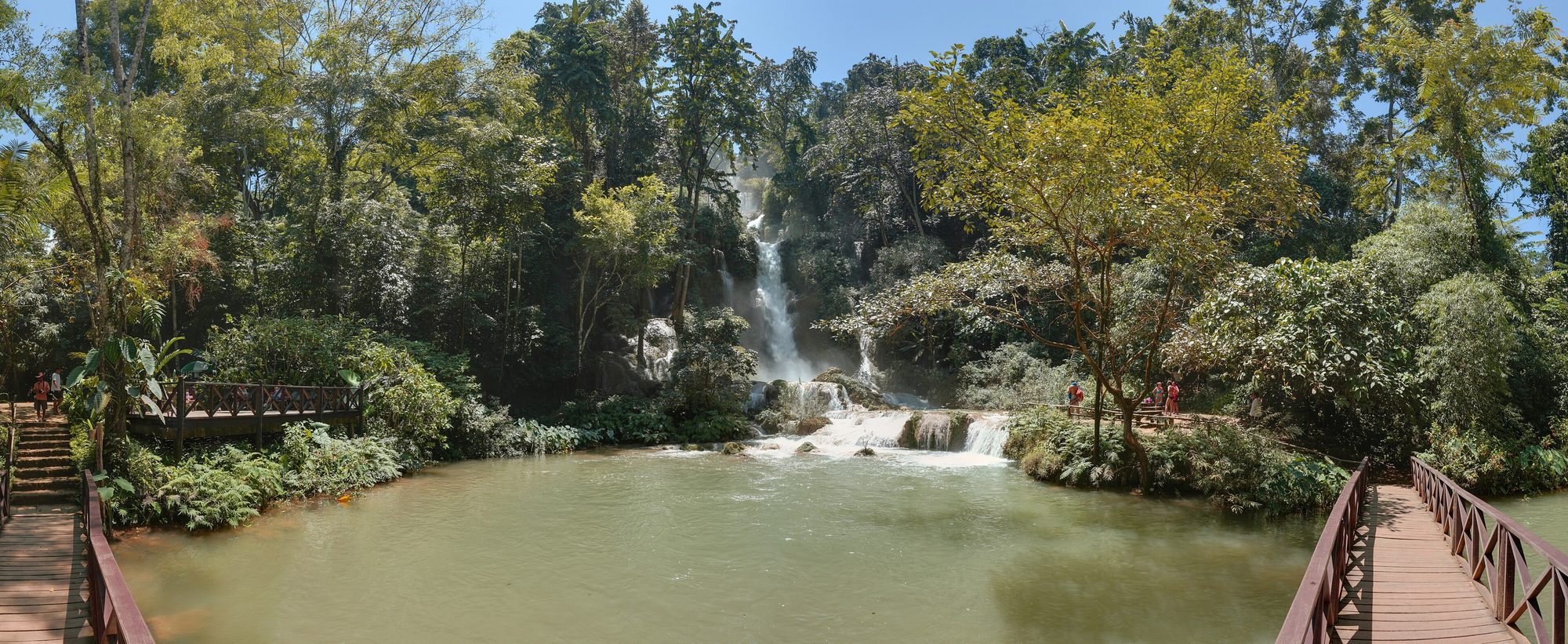
A first day covers the essential temples — Wat Xieng Thong, Wat Mai, Wat Visounnarath, the Royal Palace Museum — along with the night market on the main street. A second morning is for the Tak Bat, before the town wakes. That afternoon suits Kuang Si Falls, about thirty kilometres south: a series of turquoise pools beneath a limestone escarpment.
A third day opens up the countryside. The villages north of the city, the Pak Ou Caves where the Mekong and Nam Ou rivers meet, a boat trip upstream. Kayaking a quiet stretch in the morning, then crossing into the old town for temple visits in the afternoon, is a natural rhythm.
A fourth day is for going slower. A cooking class. A meditation session with the monks at Wat Paphai. A walk through the old town without an itinerary. Luang Prabang rewards that kind of attention.
If your schedule allows, consider weaving temple visits and monastic experience into a longer stay. Our Lao Culture Stay structures two days around the culture of the river and old town. For something deeper, the Harmony & Mindfulness Retreat pairs daily yoga and massage with cultural immersion over two to six nights.
Visiting the Temples: Practical Notes
When to go: The dry season runs from roughly November to April. Mornings are cool, the air is clear, and the light on the temple roofs in the early hours is good. The green season — May to October — brings daily rain, usually in the afternoon, but the city empties of large tour groups and the landscape around it turns vivid. Both are rewarding times to visit; the experience simply differs.
Dress code: Every temple in Luang Prabang requires covered shoulders and knees. Scarves and loose trousers are easy to carry.
The Tak Bat: The dawn alms-giving procession runs every morning along Sakkaline Road. If you want to participate rather than photograph, arrive early and follow the lead of local families who have prepared sticky rice. Treat it as a ceremony, not a spectacle.
Hiring a guide: For Wat Xieng Thong specifically, a knowledgeable guide makes a real difference. The iconography is specific to the Luang Prabang school of Buddhism, and the stories behind the murals and mosaics are not explained by signage. Our private temple tour covers the city's main sites with a guide who has been walking these streets for years.
Getting between temples: The old town is small enough to walk, or to cover by bicycle. For early morning visits, a tuk-tuk from the resort takes about fifteen minutes.
Questions
How long does it take to visit Wat Xieng Thong?
An hour covers the main sim, the Red Chapel and the Royal Funeral Chariot Hall without rushing. Arrive early and linger in the courtyard and ninety minutes passes easily. Allow extra time on festival days when ceremonies may be in progress.
Is there an entrance fee for Wat Xieng Thong?
There is an admission charge for visitors. The amount is modest and goes toward the upkeep of the complex. Carry small Lao kip when visiting temples, as notes are useful for offerings and entrance fees. Check the current amount locally on arrival.
Can you watch monks at prayer in Luang Prabang's temples?
Yes, but quietly and from a distance. Morning chanting typically begins before dawn. If a monk indicates that a space is not for visitors, follow that guidance immediately.
What is the difference between a sim and a that in Lao temples?
A sim is the ordination hall, where monks conduct formal ceremonies. A that is a stupa — a solid tower structure containing relics. Most temple complexes in Luang Prabang have both. Wat Visounnarath has the most recognisable that in the city: the round-topped That Makmo.