Vang Vieng Caves: A Practical Guide to the Best Ones
By the Travel Laos team · 23 November 2026 · 8 min read
In this post
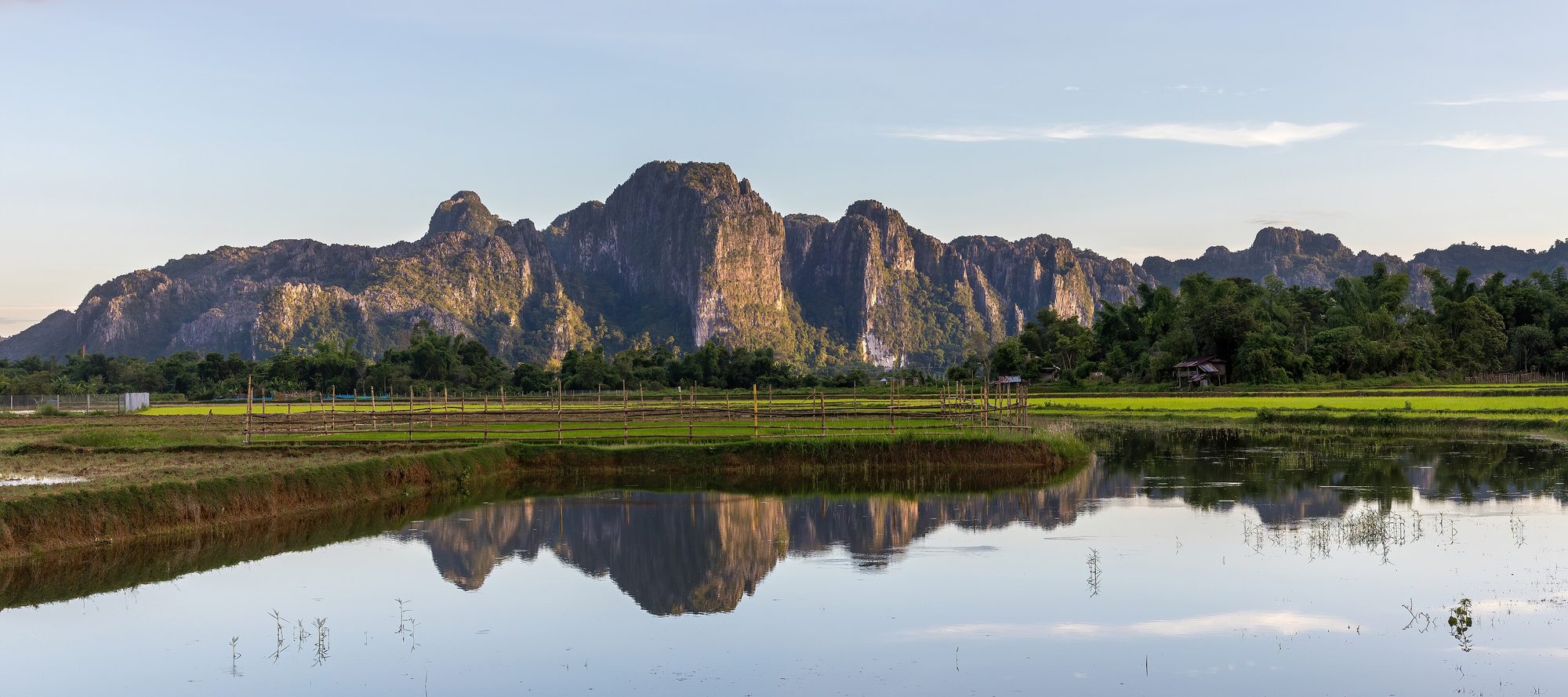
Photo: Basile Morin · CC BY-SA 4.0 · via Wikimedia Commons
The limestone hills around Vang Vieng are riddled with caves. From the road they look like solid green walls, but almost every ridge hides an opening — a dark mouth of rock leading into chambers that locals have been visiting for centuries, sometimes for shelter, sometimes for ceremony, sometimes just because the cool air inside offers relief from the heat.
This guide covers five caves worth your time, with honest notes on difficulty, what you actually see inside, and the practical details the older blog posts leave out.
Quick comparison: the main Vang Vieng caves
| Cave | Distance from town | Entry fee (as of May 2026) | Headlamp needed | Difficulty | Highlight |
|---|---|---|---|---|---|
| Tham Chang (Jang) | ~2 km | ~10,000 kip | No (lit inside) | Easy | River views from the cave mouth |
| Tham Phu Kham | ~6 km | ~10,000 kip | Yes | Moderate | Blue lagoon below, Buddha shrine inside |
| Tham Nam (Water Cave) | ~7 km | ~10,000 kip | Yes | Moderate | Tube through the cave on an underground stream |
| Tham Hoi | ~12 km | ~10,000 kip | Yes | Moderate–Hard | Long cave with stalactites and bat chambers |
| Tham Loup | ~6 km | ~10,000 kip | Yes | Easy–Moderate | Quiet, rarely crowded, cave paintings |
Fees are collected at a village gate or directly at the site, in Lao kip. Confirm the current amount on arrival — they can change without notice.
 Related readLao vs Thai Food: What's Actually Different?
Tham Chang: the easiest cave to visit
Tham Chang (also written Tham Jang — "steadfast cave") sits just south of the town centre. Cross the Nam Song on a bamboo bridge and a short staircase leads you up. The main chamber is large enough to walk through without bending, and the cave is partially lit, so no headlamp is needed. The path gets slippery in wet weather; wear shoes with grip.
The cave was used as a refuge during 19th-century conflicts, and the old fortification marks are still visible near the entrance. At the top, a terrace opens over the Nam Song valley — karst peaks, the river, rice fields — and it is genuinely one of the better views around Vang Vieng.
Tham Phu Kham and the Blue Lagoon
Most people associate Tham Phu Kham with the blue lagoon at its base, fed by a spring and set in a wide shaded hollow. Swim before or after the cave — either works.
The cave requires a steeper approach: a fixed metal ladder and some rope-assisted sections lead to the entrance. Inside the main chamber, a large bronze reclining Buddha sits surrounded by smaller images left by local devotees. This is an active place of worship, not purely a tourist attraction. Dress modestly and keep noise down.
Past the Buddha, the cave continues deeper into the hill. The floor is uneven and damp; a headlamp is essential beyond the first chamber. The deeper sections have stalactites and stalagmites. Most visitors turn back after 15–20 minutes; going further is fine with a good light and steady feet.
The site is about 6 km from town, reached by bicycle or tuk-tuk across rice paddies and through several small villages.
Tham Nam: the water cave
Tham Nam is the cave you tube through. A rope strung along the ceiling of an underground stream marks the route — you hold it and pull yourself forward on an inflated inner tube, with limestone formations passing close overhead.
Tube rental is included in or added to the site fee (confirm on arrival as of May 2026). The passage is low in places and you will get wet. Wear a headlamp on your forehead rather than carry one — both hands need to stay on the rope.
The water section runs about 200 metres, opening into a dry chamber at the far end before looping back. The whole experience takes 30–45 minutes. It is one of the more memorable things to do in the Vang Vieng area; the scale of it is genuinely hard to predict from outside.
The site sits close to Blue Lagoon 2 and is often combined with Tham Phu Kham into a half-day circuit by organised tours.
Tham Hoi: for those who want a longer cave
Tham Hoi — sometimes called the Snail Cave after the shell-like fossil formations near the entrance — sits about 12 km north of town. Fewer day-trippers reach it.
The cave runs several hundred metres into the hillside. The first section is straightforward walking; further in, passages narrow and the ceiling drops. Large chambers open up mid-way with ceiling formations that look impressive in a headlamp beam. The innermost sections require crawling and are not suitable if confined spaces bother you.
Bat colonies live deeper in Tham Hoi. Early evening, the bats leave in a stream — worth timing if you are nearby, though the cave is best visited during daylight hours for the approach path.
A local guide from the nearby village can accompany you into the longer interior sections, both for safety and because they know which passages are passable at a given water level.
Tham Loup: the quiet one
Tham Loup is a shorter cave that most tours skip in favour of Phu Kham and Tham Nam. The approach is a gentle walk through rice fields; inside, a few decorated chambers hold rudimentary cave paintings and some Buddha images. Light from outside reaches the first section; a headlamp helps beyond that.
It is not the most dramatic cave on this list. For a genuinely calm hour away from the busier sites, though, it earns its place — especially during peak season (November to February) when Phu Kham is crowded.
Going with a guide or solo?
Tham Chang and Tham Phu Kham are easy to visit independently by bicycle or tuk-tuk. Paths are signposted, entry fees are collected at village gates, and the main chambers need no technical knowledge.
Tham Nam is more straightforward with a guide who can explain the tube system and check the water level before you enter. For Tham Hoi and the longer sections of any cave, a local guide is worth arranging.
Organised half-day and full-day cave tours from town typically include transport, entry fees and a guide. Several operators run from the main street; compare what is included before booking. For general travel safety information in Laos, the Lao National Tourism Administration publishes current advice on outdoor activities.
Getting to the caves from Vang Vieng
A rented bicycle or motorbike gives you the most flexibility. The main cave sites (Tham Chang excepted) are on flat or gently rolling roads through the valley, and the ride passes rice paddies, karst peaks and small villages.
Tuk-tuks run fixed routes to the main cave clusters and will wait at the site. For travellers who do not want to ride, a shared tuk-tuk from town is the most common option.
If you are coming from Luang Prabang, the Laos–China Railway now covers the route in under two hours, making a two- or three-night stop in Vang Vieng easy to fold into a wider itinerary. The Luang Prabang to Vang Vieng route covers all your transport options in detail.
When to go
The dry season — roughly November to April — gives you firm paths, low water levels inside the caves, and reliable conditions for cycling between sites. December and January are the most comfortable for walking and climbing.
The green season (May to October) brings heavy rain. The tube section in Tham Nam can flood and close. Paths to Tham Hoi and Tham Loup become slippery after rain. The valley is a deep, vivid green in the wet months, crowds are smaller, and the lagoons are fuller — but check conditions locally before heading out.
Questions
Can you still do tubing in Vang Vieng?
Yes. River tubing on the Nam Song continues to operate. The water cave at Tham Nam also uses inner tubes on its underground stream. Both are available as of May 2026; confirm locally during the green season when water levels change.
Is Vang Vieng worth visiting?
For cave exploration, karst scenery and kayaking, yes. The town has changed significantly since its backpacker peak, and outdoor activities are now the main draw. Most visitors spend two to three days.
How much time do you need in Vang Vieng?
Two nights covers the main caves and one lagoon comfortably. Three nights lets you add kayaking or a less-visited cave without rushing.
What are the best lagoons in Vang Vieng?
The Blue Lagoon at Tham Phu Kham is the most visited. Blue Lagoon 2 near Tham Nam is quieter and pairs well with the water cave. Conditions vary by season — ask locally about current water quality.