Laos Food: What to Eat and Where to Try It
By the Travel Laos team · 24 November 2026 · 8 min read
In this post
Laos food arrives quietly. A basket of sticky rice lands on the table. A small clay pot of jeow — roasted chilli relish — appears beside it. Fresh herbs follow. Then you are eating: pulling the rice into small rounds with your fingers, dipping, tasting. No grand declarations, no towers of garnish.
That restraint is not modesty. Food in Laos has had thousands of years to become what it is: a cooking tradition built on fermented flavours, foraged greens, river fish and sticky rice. It is distinct from Thai and Vietnamese food in ways that matter, and once you understand those differences, it is one of the most compelling food cultures in Southeast Asia.
This guide covers the dishes worth knowing, what to look for in Luang Prabang's markets, and what it means to eat Lao food when it comes directly from an organic farm a few metres from the kitchen.
What Makes Laos Food Different From Its Neighbours
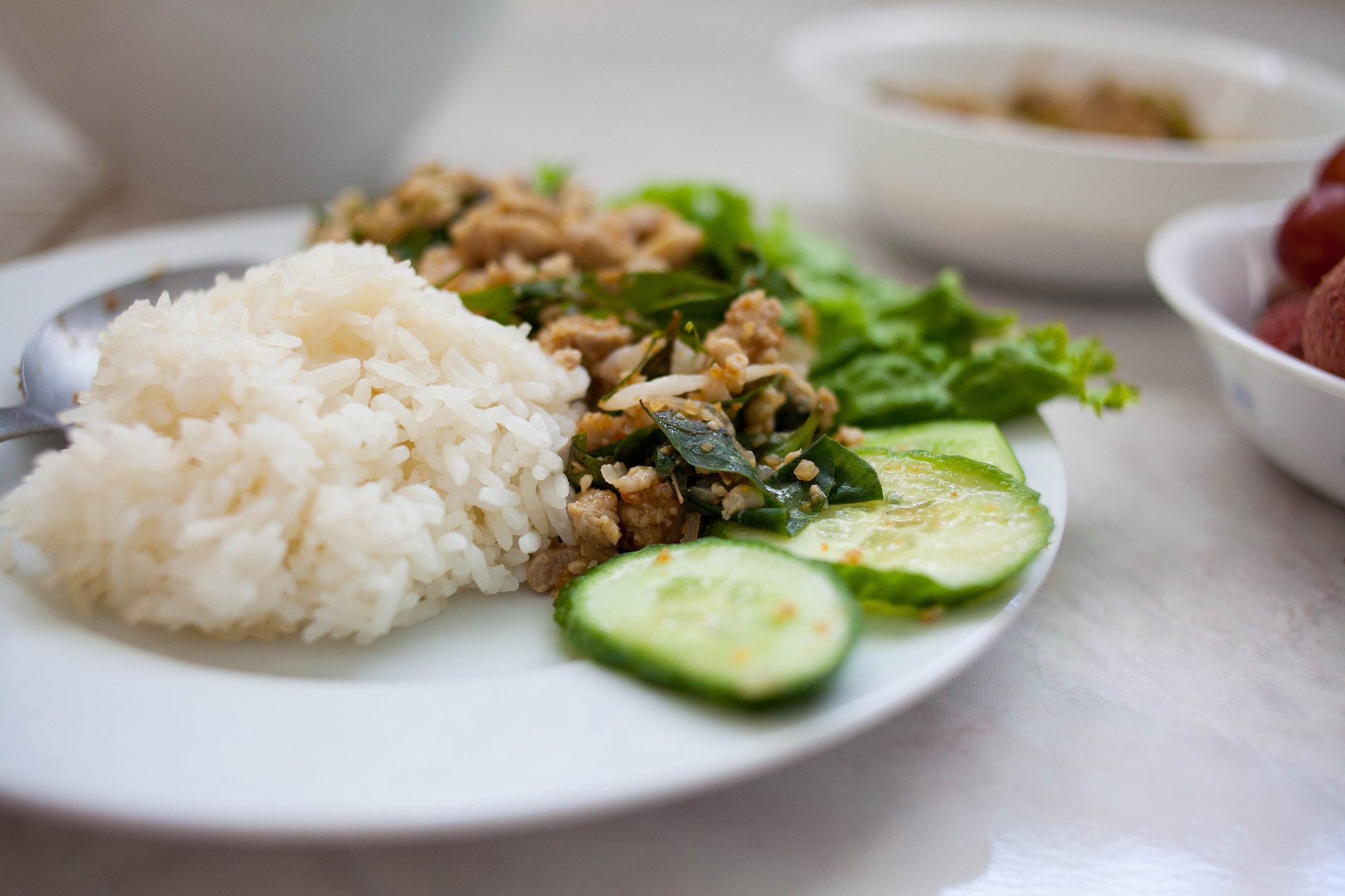
The most important thing to know about Laos cuisine is that it is built around glutinous rice — sticky rice — not jasmine rice. Lao people eat more sticky rice per person than any other country in the world. It is not a side dish; it is the structure around which everything else organises itself.
Where Thai food leans sweet and Vietnamese food leans fresh and herbal, Lao food leans fermented and deeply savoury. Paa daek — fermented river fish paste — appears in almost everything. It is not glamorous to describe, but its depth is irreplaceable. The flavour it adds to a bowl of laap or a pot of jeow is something no other ingredient replicates.
Laos is landlocked, which shapes the protein. Freshwater fish, water buffalo, chicken and pork are the staples; the sea does not come into it. The Mekong and the Nam Khan bring fish, and much of Lao cooking is a conversation with the water.
Herbs arrive raw at the table: sawtooth coriander, dill, spring onion, Thai basil. You add them yourself, adjusting each mouthful. It is cooking that asks something of the person eating it.
If you are planning a broader trip to northern Laos, the top attractions in Luang Prabang guide covers what to see and do beyond the table.
 Related readLao vs Thai Food: What's Actually Different?Photo: Sodanie Chea from Norwalk, Ca, United States · CC BY 2.0 · Wikimedia Commons
The Dishes You Need to Know
Laap — the national dish
Laap (sometimes written larb) is a salad of minced meat — chicken, pork, fish or duck — combined with toasted ground rice powder, lime juice, paa daek, fish sauce, chillis and a pile of fresh herbs. The ground rice absorbs the dressing in a way specific to Lao cooking. Laap can be eaten raw (laap dip), which is traditional in some regions, or cooked (laap suk). In Luang Prabang the cooked version is most common.
Sticky rice — khao niaw
Khao niaw is steamed in a conical bamboo basket called a huad and served in a small lidded container called a tip khao. You eat it with your right hand, pulling small amounts free and rolling them lightly before dipping. Some restaurants in Luang Prabang serve purple sticky rice with mango and coconut cream as dessert — a dish that sits at the edge of sweet without quite leaving savoury behind.
Tam mak hoong — green papaya salad
The Lao version of green papaya salad is the ancestor of the more widely known Thai som tam. It is typically less sweet, more fermented and more pungent — paa daek appears here alongside dried prawns, chillis pounded in a mortar, lime and palm sugar. Sharp, funky and exactly right with sticky rice. Variations include tam mak thaeng (cucumber) and tam mak khuea (aubergine).
Mok pa — steamed fish in banana leaf
A banana leaf is lined with galangal, kaffir lime leaf and dill, then filled with fish mixed with paa daek, eggs and aromatics, wrapped tightly and steamed or grilled. The result is delicate and fragrant, the fish cooked through in its own steam. It is one of the most elegant things in Lao cooking and one of the least known outside the country.
Or lam — Luang Prabang stew
Or lam is a slow-cooked broth of meat, aubergine, wood ear mushrooms, dried buffalo skin, chillis and a herb called mak khaen — Sichuan-adjacent in its slight numbing quality. Thick, complex, and deeply local to Luang Prabang. Few visitors seek it out, which makes finding a good version satisfying.
Khao piak sen — Lao noodle soup
Made with fresh, slightly gelatinous rice noodles in a clear broth, khao piak sen is a morning dish eaten at market stalls before the heat builds. In Luang Prabang, the morning market along the main street is where you will find it.
Sai oua — Lao sausage
Sai oua is an aromatic pork sausage spiced with galangal, kaffir lime leaf and dried chillis, then grilled until the skin crisps. It is sold at markets and night-food stalls throughout Luang Prabang. Eaten with sticky rice and a sharp jeow, it is a complete meal in a few bites.
The Markets of Luang Prabang
Food in Laos begins at the market. Luang Prabang's morning market along the main street starts before 06:00 and is largely done by 08:00. This is where local families buy the day's food: fresh vegetables, dried chillis, foraged mushrooms, grilled river fish, sticky rice in bags, pre-made relishes, sweets wrapped in banana leaf.
The night market at the base of Phu Si hill is more accessible for visitors and focuses on street food. Lao sausage, skewered meats and sticky rice are the most reliable choices there. Arrive around 17:00 as stalls are setting up; most close by 22:00.
Photo: Basile Morin · CC BY-SA 4.0 · via Wikimedia Commons
Farm-to-Table: Eating Lao Food at Its Source
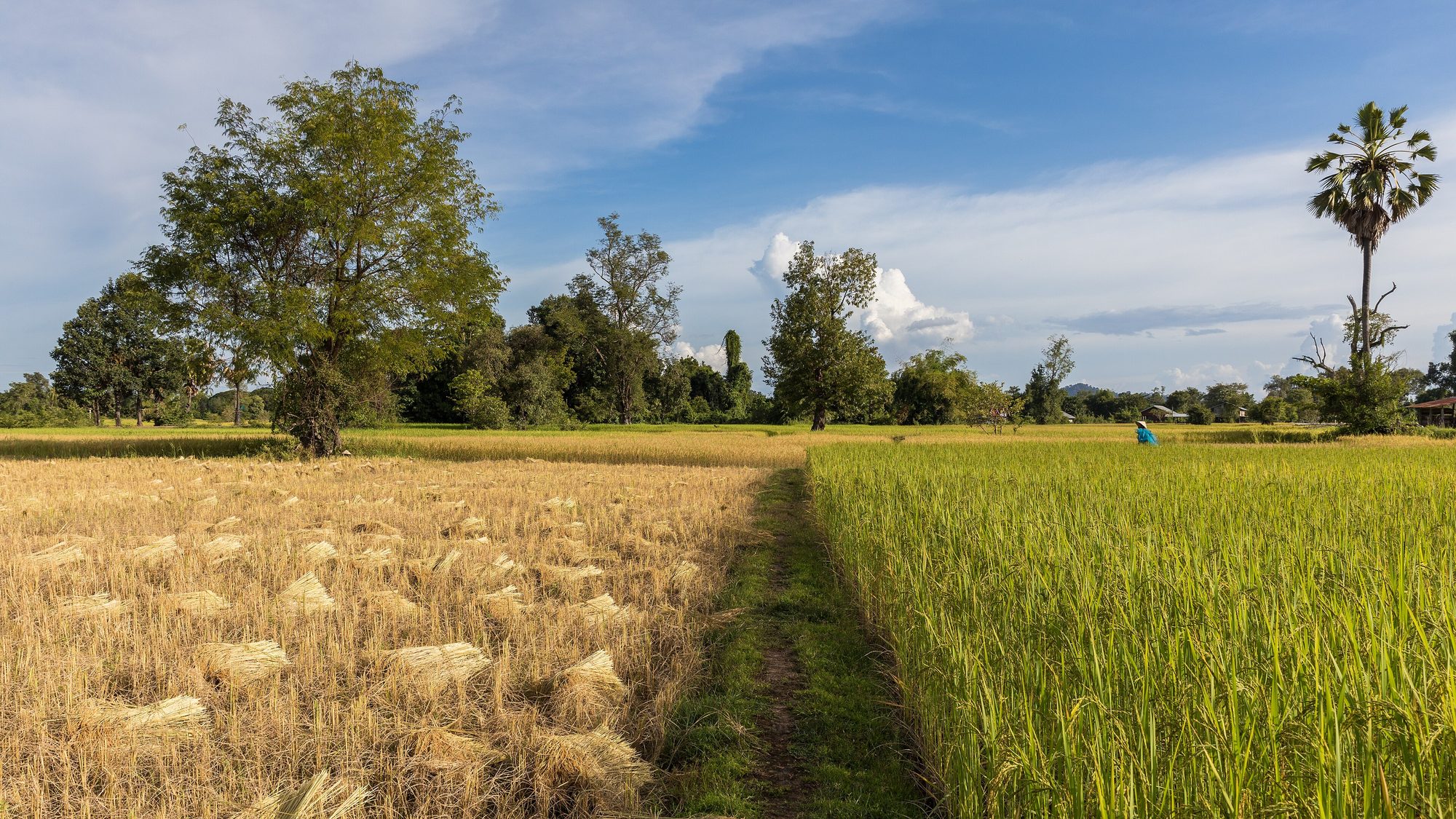
The most direct way to understand Lao cooking is to follow ingredients from soil to plate. Outside Luang Prabang, a small number of properties have built working organic farms that supply their kitchens directly. The Namkhan, on the Nam Khan River a short distance from the UNESCO Old Town, runs nine greenhouses, mushroom production and more than 60 crops; its farm-to-table restaurant Roots opens from 07:00 to 22:00, and herbs used in a lunchtime laap were growing at dawn.
For visitors who want to cook rather than just eat, a hands-on cooking class using ingredients from the garden is one of the more instructive ways to spend a morning in the region. A Lao chef guides you through dishes made with produce picked that day; lunch is what you cooked. Day visitors can book the Farm Cooking & River Afternoon experience, which pairs the cooking class with time by the river.
Vegetarian and Dietary Needs
Lao food is not naturally vegetarian-friendly: paa daek and fish sauce appear in most dishes including salads and relishes. That said, Buddhist traditions mean that vegetarian cooking (ahan jae) exists, and many Luang Prabang restaurants cook fresh to order and can accommodate requests. Tofu, mushrooms, aubergine, morning glory (pak bong) and a wide variety of greens are all available. A meal built around several jeow, fresh herbs and grilled vegetables is genuinely satisfying.
Practical Notes for Food Travellers
The dry season, roughly November to April, is when food in Laos is most varied. Cool mornings bring good market conditions and the farm's output is at its peak. The green season, May to October, brings tropical rain; the river swells, the farm changes character and some crops give way to others. The rhythm of what appears on the table shifts accordingly.
Water from the tap is not safe to drink in Laos. Bottled or filtered water from your hotel is standard. Cooked food at reputable restaurants is generally reliable; raw salads and fresh juice at smaller vendors carry more variable risk. For current health and food safety guidance, check UK government travel advice for Laos.
Luang Prabang International Airport receives direct regional flights and connections through Vientiane. Lao Airlines operates domestic routes; most international visitors connect through Bangkok, Chiang Mai, Hanoi, Ho Chi Minh City, Singapore or Kuala Lumpur. For more on getting there, the Luang Prabang airport arrivals guide covers the practical detail.
Questions
What are some Laos dishes every visitor should try?
Laap, sticky rice, tam mak hoong, mok pa and or lam cover the essential techniques — fermented, steamed, slow-cooked and grilled. All are found in Luang Prabang without difficulty.
Which country eats the most sticky rice?
Laos does. Lao people consume more sticky rice per person than any other nation. It is steamed in a bamboo basket, served in a lidded container and eaten with the hands at every meal.
Is Lao food good for vegetarians?
Paa daek and fish sauce appear in most traditional recipes. In Luang Prabang, Buddhist practice means vegetarian options exist, and restaurants that cook to order can often accommodate dietary requests.
What is Laos known for in terms of food?
Laos has the highest per-capita consumption of sticky rice in the world, and a cuisine built around fermented ingredients — particularly paa daek. The food is more savoury and fermented than Thai or Vietnamese cooking, with strong regional character around Luang Prabang.